Swing-Arm Half-Motor Drive Unit for Monorail Transport Locomotives: Structure, Braking & Maintenance Guide
The swing-arm half-motor drive unit is a compact, modular traction device designed for monorail transport locomotives operating on I140E/I140V rail systems in underground coal mines. Built to adapt to varying gradient conditions, the swing-arm half-motor drive unit features a dual-brake system, fail-safe hydraulic braking, and a direct-drive radial piston motor — making it one of the most reliable and low-maintenance drive solutions available for underground monorail haulage applications.
What Is a Swing-Arm Half-Motor Drive Unit?
The swing-arm half-motor drive unit is the core traction component of a monorail transport locomotive. It converts hydraulic power from the locomotive’s hydraulic system into rotational torque, driving the friction wheel along the monorail rail to propel the locomotive and its payload.
Key design principles of the swing-arm half-motor drive unit include:
- Modular construction — simplified installation, replacement, and field maintenance
- Direct drive (no reduction gearing) — eliminates mechanical power loss through intermediate reduction stages, improving overall locomotive travel efficiency
- Rotating swing-arm bracket structure — allows the drive unit to self-adjust according to gradient conditions, maintaining consistent friction wheel contact pressure on the rail
- Imported radial piston hydraulic motor — German or British OEM motors as standard, ensuring reliability in demanding underground environments
According to international underground mine transport standards, drive unit reliability and braking performance are among the most critical safety parameters for monorail transport locomotives operating on gradients. The swing-arm half-motor drive unit is engineered to meet these requirements across a full range of operating conditions.
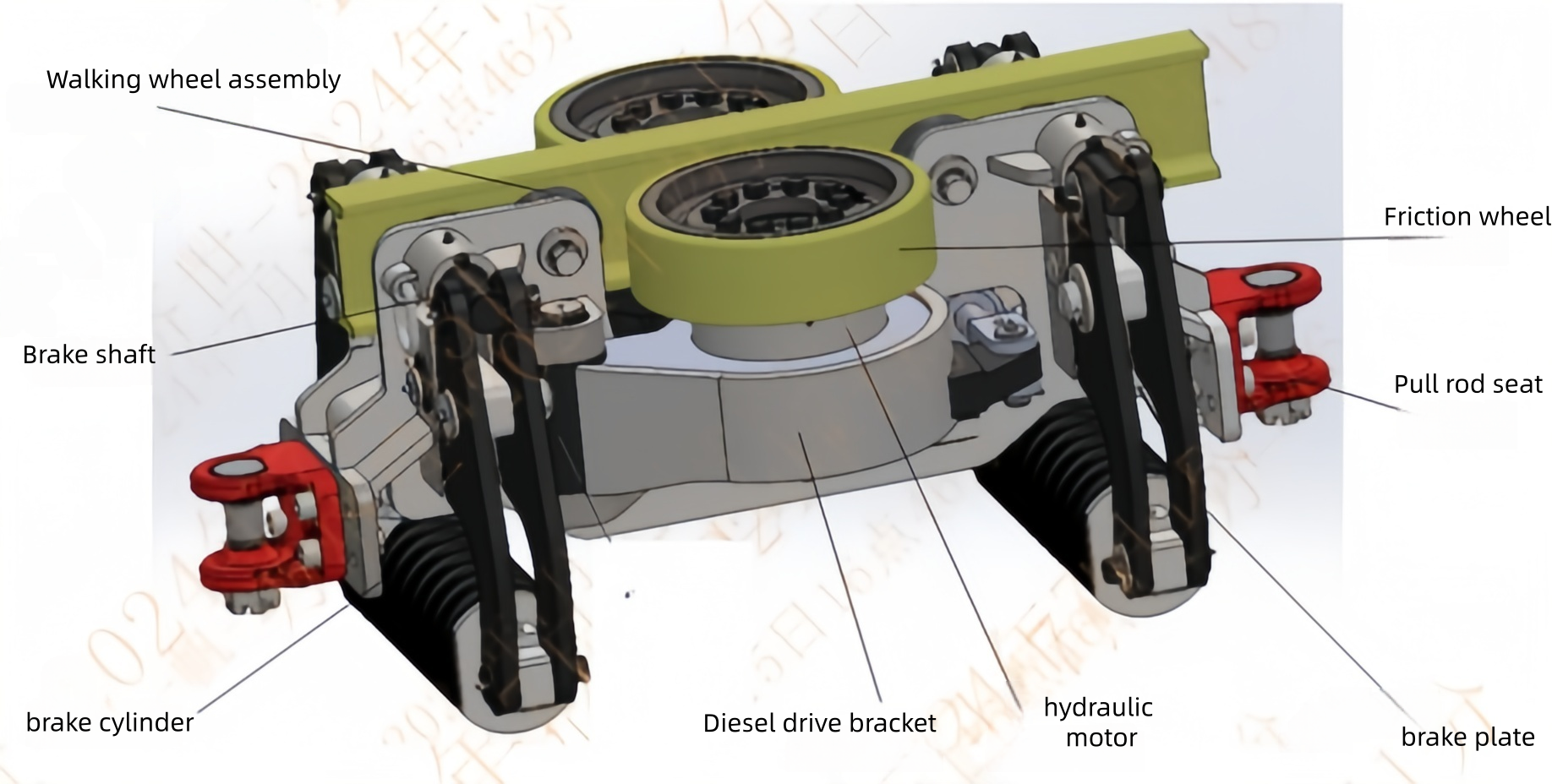
Drive Unit Structure and Key Components
The swing-arm half-motor drive unit consists of the following core assemblies:
1. Drive Bracket (Swing-Arm Frame)
The rotating swing-arm bracket allows the entire drive assembly to pivot in response to gradient changes, ensuring the friction wheel maintains consistent contact force against the monorail rail surface across flat, inclined, and curved roadway sections.
2. Radial Piston Hydraulic Motor
The hydraulic motor is a radial piston design sourced from German or British OEM manufacturers. The motor connects to the friction wheel via an intermediate short shaft — a direct drive configuration that eliminates the need for a reduction gearbox, reducing mechanical complexity and power transmission losses.
3. Friction Wheel
The friction wheel is the primary contact element between the drive unit and the monorail rail. It is driven directly by the hydraulic motor via the intermediate short shaft. The friction wheel diameter is a critical maintenance parameter (see maintenance section below).
4. Dual Brake System
The swing-arm half-motor drive unit is equipped with two independent brakes:
- Service brake — for normal deceleration and controlled stops during operation
- Safety brake — emergency brake activated automatically under hydraulic pressure loss
Each brake cylinder operates at a working pressure of 14–16 MPa. The braking force of a single brake is 1.5–2× the rated traction force of the drive unit, providing a substantial safety margin against runaway on uphill and downhill gradients.
Braking System: How It Works
The braking system of the swing-arm half-motor drive unit is a fail-safe design — meaning the brakes engage automatically when hydraulic pressure is lost, rather than requiring active hydraulic pressure to hold the brakes on.
Normal Operation
During normal locomotive operation, hydraulic pressure is applied to the brake cylinders, compressing the brake springs and releasing the brake pads from the rail web. The hydraulic motor drives the friction wheel, and the locomotive travels freely along the monorail.
Emergency Braking
When hydraulic pressure is released (either by operator command or system failure), the brake springs automatically clamp the brake pads against the rail web, bringing the locomotive to a controlled stop. This fail-safe mechanism is critical for preventing runaway accidents in two scenarios common in underground coal mines:
- Uphill rollback — locomotive loses traction and begins sliding back down the gradient
- Downhill runaway — locomotive accelerates beyond controlled speed on a descent
Braking Performance Standards
- At maximum load, maximum gradient, and maximum design speed (downhill): braking distance does not exceed the distance traveled in 6 seconds at that speed, in line with ILO underground mine transport safety standards
- At minimum load, maximum gradient (uphill): braking deceleration does not exceed 5 m/s²
- Hydraulic cylinder working pressure is adjustable to suit specific mine operating conditions
Technical Specifications — DC03-03B
| Parameter | Unit | Value |
|---|---|---|
| Model | — | DC03-03B |
| Brake Pressure | MPa | 14–16 |
| Clamping Pressure | MPa | 8–12 |
| Rated Traction Force | kN | 30 |
| Max Operating Speed (horizontal) | m/s | 2.2 |
| Min Turning Radius — Horizontal | m | 4 |
| Min Turning Radius — Vertical | m | 8 |
| Max Gradient | ° | ≤25° |
| Drive Unit Weight | kg | 590 |
| Dimensions (L × W × H) | mm | 1030 × 720 × 520 |
Maintenance and Inspection Guide
Regular inspection and maintenance of the swing-arm half-motor drive unit is essential for safe and efficient monorail transport locomotive operation. The following checks should be performed at scheduled maintenance intervals.
5.1 Routine Inspection Checklist
Clamping Cylinders
Inspect all clamping cylinders for hydraulic oil leaks. Any leakage from cylinder seals or fittings must be rectified before returning the locomotive to service.
Friction Wheel Hub Bolts
Check friction wheel hub bolts for loosening. Required tightening torque: 145 Nm. Bolts found below this torque must be retorqued immediately.
Load Wheel Bolt Axles
Verify load wheel bolt axle tightening torque. Required torque: 400–450 Nm.
Brake Pads — Wear Limit
Inspect brake pad thickness. When the pad dimension wears from 22 mm down to 17 mm, the brake pads must be replaced immediately. Operating with worn brake pads below this limit compromises braking force and is a safety violation.
Friction Wheel — Wear & Damage Inspection
Inspect friction wheel diameter and surface condition at each maintenance interval:
- Diameter wear limit: Replace when diameter wears from φ340 mm to φ320 mm
- Surface condition: Replace immediately if cracking, deformation, or rubber debonding is detected
- Replacement rule: Friction wheels must always be replaced in pairs
5.2 Lubrication Requirements
All moving points on the swing-arm half-motor drive unit must be lubricated with approved lubricating oil at regular intervals. Refer to the lubrication schedule specific to your mine’s operating hours and gradient conditions. Inadequate lubrication is a leading cause of premature wear in drive unit components.
Frequently Asked Questions
What rail systems is the swing-arm half-motor drive unit compatible with?
The swing-arm half-motor drive unit (DC03-03B) is designed for monorail transport locomotives operating on I140E and I140V rail systems, which are standard specifications for underground coal mine monorail haulage in China and export markets.
Why use a direct-drive radial piston motor instead of a gearbox-driven system?
Direct drive eliminates mechanical power loss through reduction gearing, improving locomotive travel efficiency. It also reduces the number of mechanical components, lowering maintenance requirements and failure points in underground environments where service access is limited.
What happens if the hydraulic system fails while the locomotive is on a gradient?
The fail-safe brake design means that any loss of hydraulic pressure — whether intentional or due to system failure — automatically engages the brake springs, clamping the brake pads against the rail web and bringing the locomotive to a stop. This prevents both uphill rollback and downhill runaway scenarios.
Can the braking pressure be adjusted for different mine conditions?
Yes. The hydraulic cylinder working pressure is adjustable to suit specific locomotive application conditions, including variations in gradient, payload weight, and roadway surface characteristics.
How often should brake pads be inspected?
Brake pad inspection should be included in every scheduled maintenance cycle. The wear limit (22 mm → 17 mm) must be checked regularly, with replacement frequency depending on operating hours, gradient severity, and braking frequency of the specific locomotive deployment.
Custom Monorail Transport Locomotive Drive Units — Get a Quote
Relystone manufactures and exports complete monorail transport locomotive systems and drive unit components to coal mines across 30+ countries, including Australia, Vietnam, Czech Republic, and throughout Central Asia and the Middle East. Every drive configuration is engineered to your mine’s specific gradient, payload, and roadway conditions.
Contact Relystone for a 1-on-1 technical consultation and project-specific quote →
ビジョンとミッション
私たちは、絶え間ない技術革新と卓越した製品品質を通じて、世界中のお客様に安全で効率的、かつ環境に優しいソリューションを提供し、業界の進歩を促進し、より良い未来を共に創造していくことをお約束します。.
コア・バリュー
私たちは顧客のニーズに導かれ、そのシナリオを深く理解し、期待を上回る製品とサービス体験を提供し、永続的なパートナーシップを確立・維持します。.人としてのあり方 | 物事の進め方 | ビジネスの進め方 | 実践的イノベーション | 卓越性を追求する | チームスピリット
その他の製品
瑞石智能科技(山東)有限公司.
瑞石智能科技(山東)有限公司は2022年10月に5000万元の資本で設立され、鉱山機械の生産と販売を統合している。Menciusの故郷であるZouChengに位置し、敷地面積は11,000m²、50名以上の専門家を擁し、強力な研究開発と製造サポートを保証しています。長年の実践により、鉱業、金鉱、電力部門に対応する完全な流体制御ポートフォリオを生み出し、そのユニークで高品質、信頼性の高い設計は、顧客の高い評価を得ている。精鋭のアフターセールス・チームに支えられ、リーストーンは ’集中、革新、実用、効率 “の精神と、”品質は生存のために、技術は発展のために、管理は効率のために、ブランドは市場のために “という原則に従っています。高性能の製品、専門家のサポート、緊密な協力は、相互利益とウィンウィンの結果をもたらします。.