Two-Stage Brake for Mining Suspended Monorail Transport Locomotive
The suspended monorail transport locomotive is the core equipment for efficient and safe mining transportation in underground coal mines. Its braking system directly determines whether the vehicle can avoid accidents such as slope sliding and downhill runaway. Most conventional monorail transport locomotive models, including the latest lithium-ion battery monorail transport locomotive, adopt a single-set brake structure, which has obvious safety hazards: once any brake fails, the entire vehicle loses braking force, leading to catastrophic consequences.
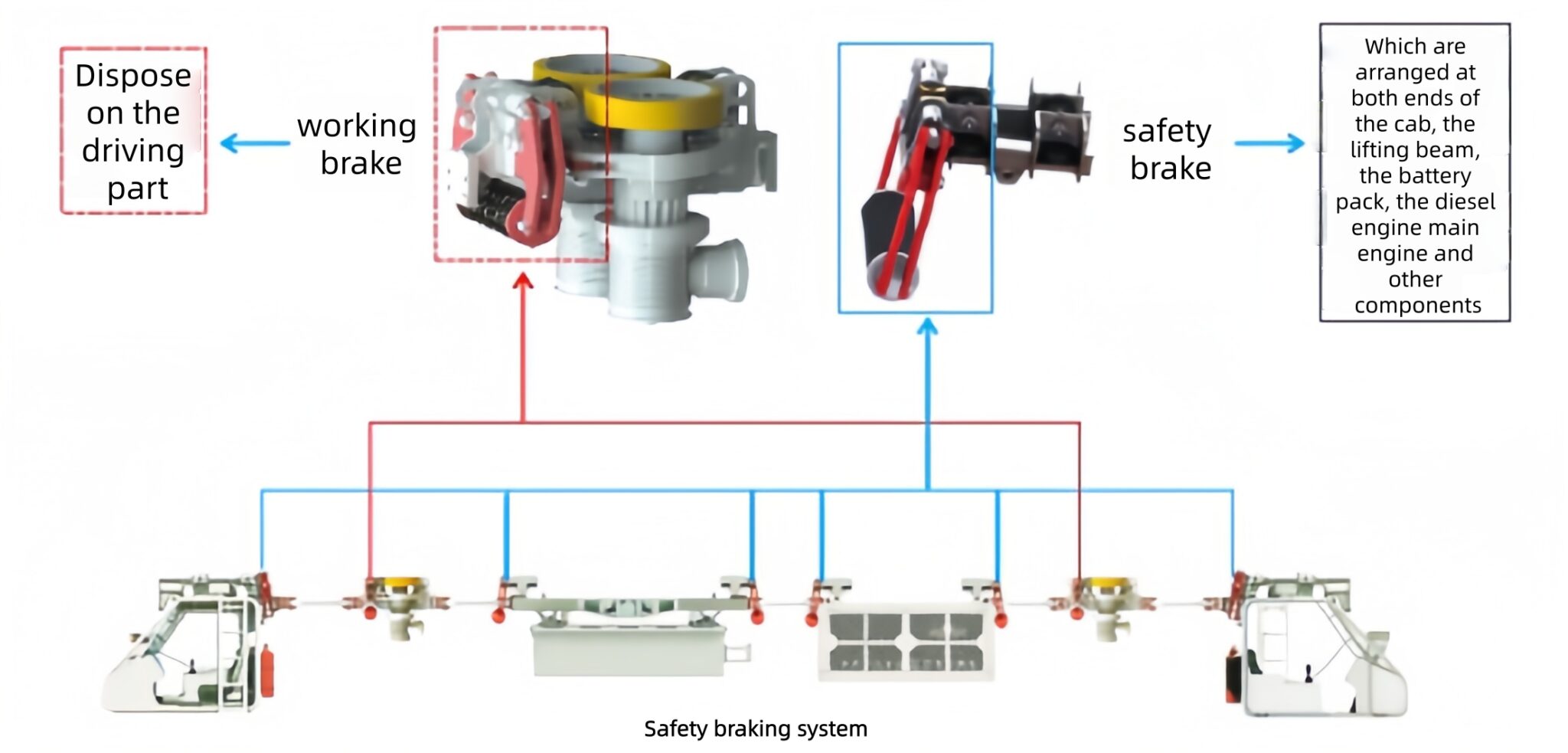
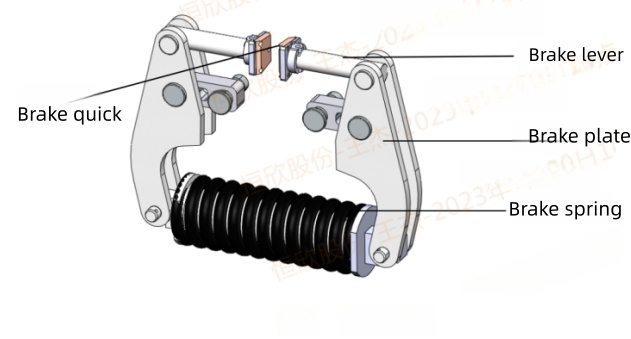
To solve this pain point, the innovative two-stage brake system has become the standard configuration for high-end suspended monorail transport locomotive. This system is composed of independent primary and secondary brake systems, which can provide dual protection for mining transportation.
1. Core Composition of Two-Stage Brake System
1.1 Primary (Service) Brake
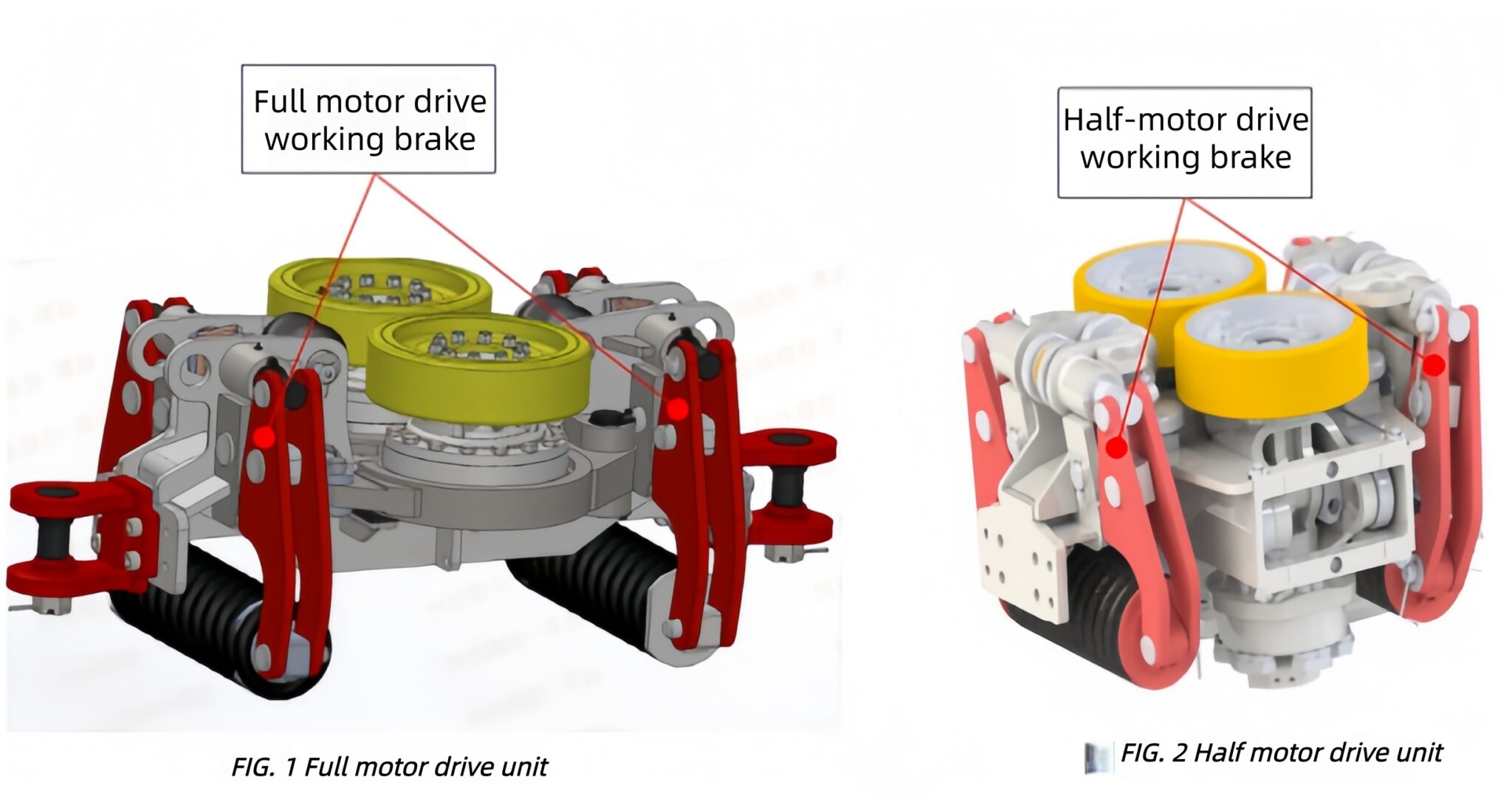
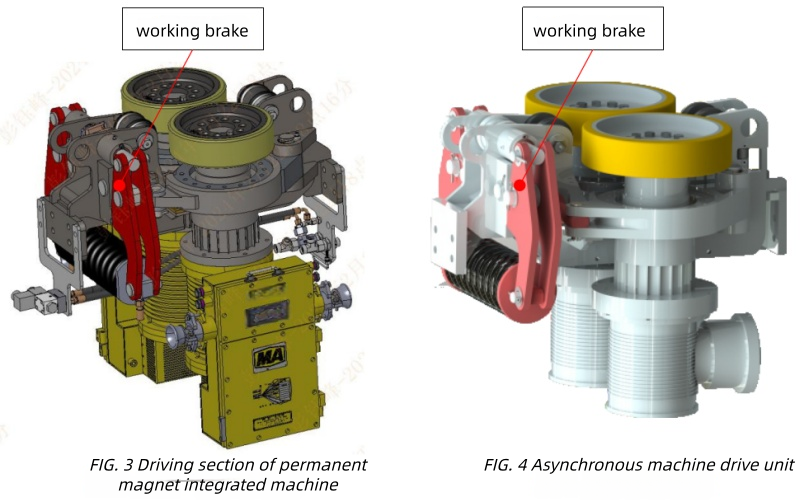
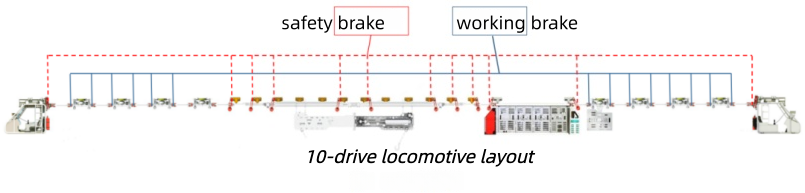
Installed on the drive unit, the primary brake is responsible for daily parking, normal driving deceleration, and basic safety protection. It is the main control unit for the daily operation of the suspended monorail transport locomotive.
1.2 Secondary (Safety Brake)
As an independent backup brake, the safety brake is specially designed for extreme working conditions. It is installed on key parts such as the cab, passenger car, hydraulic lifting beam, and power unit of the monorail transport locomotive to prevent sliding and runaway under working conditions such as slope parking, heavy load lifting, and equipment failure.
1.3 Time Delay Mechanism
There is a 0.5–1 second time delay between the primary and secondary brakes. This design avoids track distortion or damage caused by simultaneous multi-point braking of the locomotive, ensuring the long-term service life of the track and the suspended monorail transport locomotive.
2. Working Conditions and Layout Strategy
2.1 Level Roadway
Only the primary brake is used for parking, which reduces unnecessary wear to the brake system of the suspended monorail transport locomotive.
2.2 Slope Roadway & High-Risk Loads
The primary brake and secondary brake work together to provide stable parking braking, effectively preventing the monorail transport locomotive from sliding during lifting or restarting.
2.3 Emergency Braking
Triggered by manual emergency buttons or hydraulic pressure relief, both brakes act in a graded sequence to ensure the maximum stopping force of the lithium-ion battery monorail transport locomotive in critical situations.
3. Working Principle Supported by Speed Limiting Protection Trolley
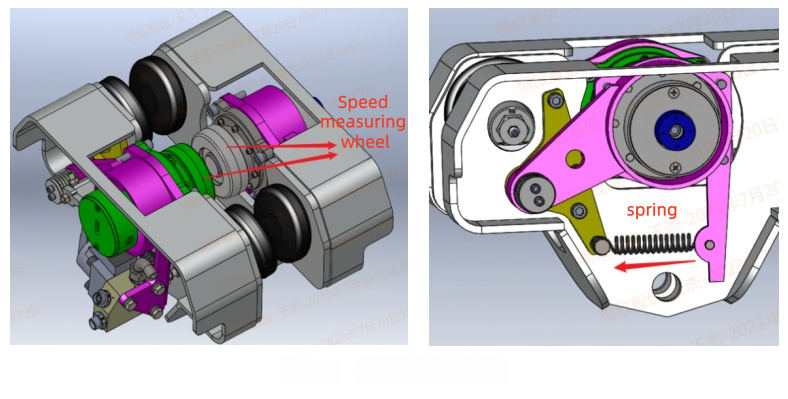
The entire braking system is supported by the speed limiting protection trolley, which monitors the speed of the suspended monorail transport locomotive in real time. When an overspeed signal is detected, the electric control system cuts off the hydraulic pressure, and the spring force drives the brake pads to clamp the track, realizing automatic overspeed braking.
This mechanism greatly improves the active safety protection capability of the monorail transport locomotive in complex roadways.
Working Conditions and Layout of Brakes
1. Service Braking
- Used for normal parking and safety protection stops.
- Installed on one or both sides of the drive unit.
2. Safety Braking
- Used for downhill runaway, uphill sliding, power failure, traction shortage, or fire.
- Provides parking braking on inclined roadways, especially during lifting operations.
- Activates immediately when the primary brake fails.
- Installed on cab, passenger car, hydraulic lifting beam, power unit, and other heavy-duty or manned parts.
3. Emergency Braking
Triggered manually by two signals: hydraulic pressure relief and electric emergency button. Both primary and secondary brakes work in sequence.
4. Common Faults and Targeted Troubleshooting
4.1 Insufficient Braking Force
- Causes: Worn brake pads, failed brake springs, or oil/water on the rail surface reducing friction.
- Solutions: Replace worn parts, clean the rail surface, and use friction pads that meet the standard (friction coefficient ≥0.4).
4.2 Failure to Trigger Braking Signals
- Causes: Faulty speed limiting protection trolley, damaged encoder, or failure of the electric control system.
- Solutions: Inspect the speed limiting device, replace faulty sensors, and debug the control system.
4.3 Brake Mechanical Jam
- Causes: Stuck solenoid valve, blocked oil circuit, or mechanical limit blocking the brake lever.
- Solutions: Clean the solenoid valve, unblock the oil circuit, and remove mechanical obstacles.
Vision & Mission
We are committed to providing safe, efficient, and environmentally friendly solutions for global customers through continuous technological innovation and exceptional product quality, driving industry progress and collectively creating a better future.
Core Values
We are guided by customer needs, deeply understand their scenarios, deliver products and service experiences that exceed expectations, and establish and maintain lasting partnerships.How to be a person | How to do things | How to do business | Pragmatic Innovation | Pursue excellence | Team Spirit
More products
Relystone Intelligent Technology (Shandong) Co., Ltd.
Relystone Intelligent Technology (Shandong) Co., Ltd., founded in October 2022 with 50 million Yuan capital, integrates mining machinery production and sales. Located in Mencius’ hometown, ZouCheng, it covers 11,000 m² and employs over 50 professionals, ensuring strong R&D and manufacturing support. Years of practice have yielded a full fluid control portfolio serving mining, gold and power sectors; its unique, high-quality, reliable design wins customer acclaim. Backed by an elite after-sales team, Relystone follows the spirit of “focus, innovation, pragmatism, efficiency” and the principle of “quality for survival, technology for development, management for efficiency, brand for market.” High-performance products, expert support and close cooperation deliver mutual benefit and win-win results.